Sourcing vs buying
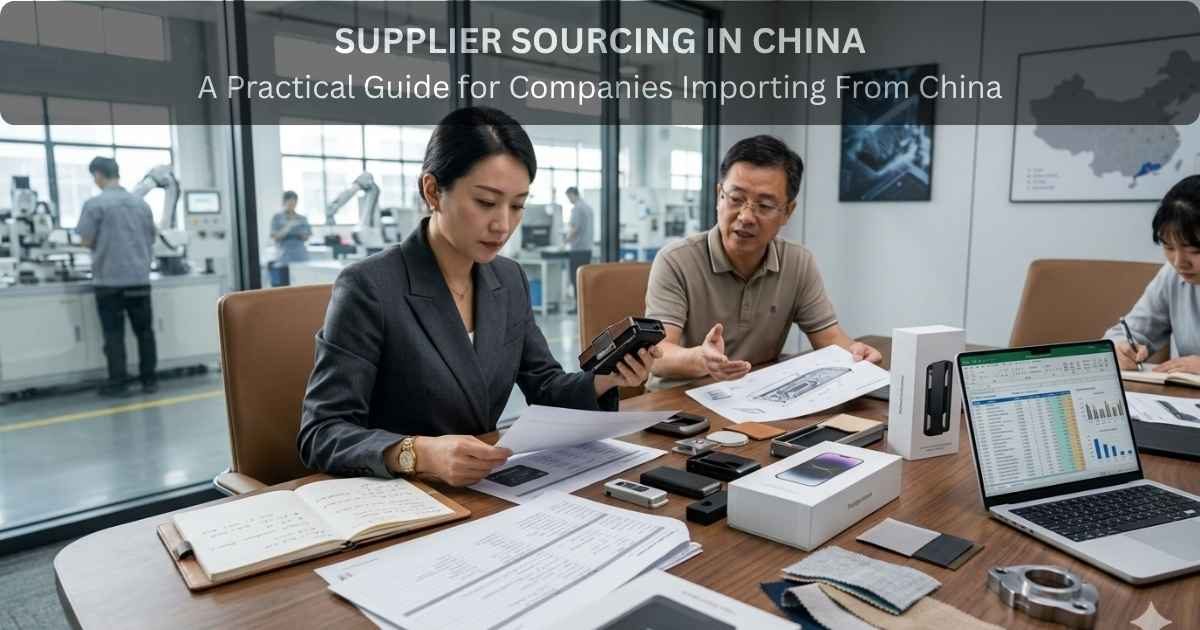
Buying is choosing a listing and paying. Sourcing is the work that happens before that: defining exactly what you want, finding several factories that can make it, getting quotes you can actually compare, and pressure-testing the cheapest one until you trust it. Importers who skip straight to buying usually pay for it later — in defects, in delays, or in a price that quietly included three middlemen.
Treat sourcing as a process with a defined output: a shortlist of vetted factories, comparable quotes, and one supplier you have a reason to trust. Everything below builds toward that.
The four sourcing channels, compared
There are really only four ways to reach a Chinese supplier, and each trades convenience against control.
Online marketplaces (Alibaba, Made-in-China, Global Sources). Fast and free to browse, with huge breadth. The cost is signal: listings are optimised for clicks, many "manufacturers" are traders, and you cannot tell a serious factory from a storefront without doing the verification yourself.
Trade shows (the Canton Fair, industry expos). You meet people, hold product and read a room in a way you cannot online. But you only see exhibitors who can afford a booth, you are sourcing on someone else's calendar, and a handshake in a hall is still not a verified factory.
Sourcing agents. A person in China who finds and manages suppliers for you. A good agent is worth far more than the fee. The risk is that "agent" is an unregulated word — quality runs from genuine specialists to brokers taking a hidden cut from the factory.
End-to-end partners. A firm that runs the whole chain — sourcing, verification, contracts, quality control, logistics — on a transparent fee. This is the model Mila Sourcing runs. It costs more than browsing Alibaba yourself; it costs far less than one bad production run.
Write a spec that gets accurate quotes
Vague briefs get vague quotes, and vague quotes are how factories underbid to win the order and then claw the margin back through cheaper materials. A quotable spec includes materials and grades, exact dimensions and tolerances, finish and colour references, packaging requirements, the certifications the product must carry for the EU market, your target order quantity, and your Incoterm. The more you pin down, the less room a factory has to surprise you.
A good rule: if two factories could read your spec and build meaningfully different products, the spec is not finished.
Get comparable quotes: the 3–5 rule
Send the identical spec to three to five factories. Fewer than three and you have no benchmark. More than five and you are managing a spreadsheet instead of sourcing. The point is not only price — it is the spread. A quote far below the others is not a bargain; it is a question. It usually means a different material, a missing certification, or a number that will move after you have committed.
To build that shortlist well, start with our guide on how to find reliable suppliers in China.
Read a quote: what's hidden in it
A quote is a story about cost, and the interesting parts are often unstated. Check the Incoterm — an EXW price and a DDP price are not remotely the same number. Check whether tooling or mould cost is included or billed separately. Check the MOQ and the price breaks. Check what certification and testing is included versus charged later. Check the deposit terms and payment milestones. Two quotes that look €0.40 apart per unit can be €2 apart once everything is on the table.
Where your negotiation leverage comes from
Leverage in Chinese sourcing is not aggression. It is information. When a factory knows you have three comparable quotes, understand their cost structure, and can describe your own order volume credibly, the conversation changes on its own. You do not need to push hard — you need to make it clear you cannot be bluffed. Buyers who negotiate on price alone tend to win the number and lose on materials. Negotiate on the whole package: price, terms, lead time and what happens when something is wrong.
From sample to production
Approve a golden sample in writing before any bulk run, and keep it — every later inspection is measured against it. Then protect the deal with a bilingual contract before the deposit moves. The single biggest gap between sourcing and a clean delivery is verification: confirming the factory you quoted is the factory that builds, and that what they build matches the sample. That is its own discipline — we cover it in how to verify a Chinese manufacturer before you commit.
Where Mila Sourcing fits
Mila Sourcing runs this entire process as infrastructure. Sourcing Activation matches you with a verified specialist agent and returns three to five real factory quotes on your spec. Full Production Management then carries it through contracts, quality control and logistics. If you are still deciding which approach fits your product, a Supply Chain Strategy Call maps it with you directly.